AbLead Logo
AbLead by Ketchem Biotherapeutics Consulting
Computational Antibody Lead Optimization

Developability by Design.
Before You Invest in the Lab.

Comprehensive antibody intelligence to evaluate, rank order, and engineer biotherapeutics. Identify and design stable, developable candidates, and eliminate liability risks early.

The Cost of Selecting the Wrong Lead

Pursuing a poorly behaving antibody is one of the most expensive mistakes in drug discovery.
Sequence and structural analysis and optimization minimizes this risk.

$11K-$16K Average daily out-of-pocket cost for the early development of a biotherapeutic lead candidate .
60% Phase 2 antibody candidates with developability issues .
$800K Lost value per day of delay due to poor developability .
"The cost of engineering an antibody at the discovery stage is significantly lower than the cost of optimizing process and formulation at the development stage ."
"Application of rank ordering and stability optimization is a proven method for antibody therapeutic design ."
Randal R. Ketchem, Ph.D.

Biotherapeutic optimization is well worth the initial investment of time and resources

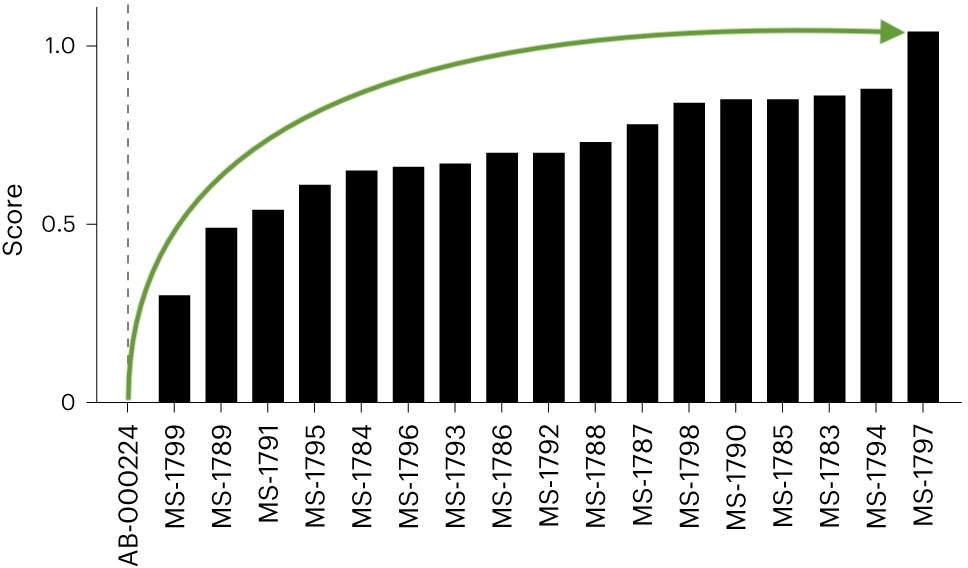
Biophysical Properties

Stability engineering greatly improved overall biophysical properties ...

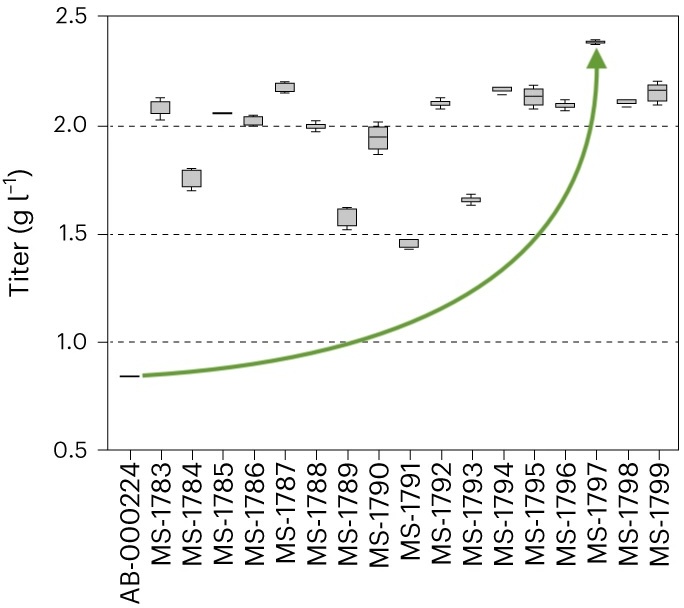
Stable Cell Titer

... and more than doubled stable cell titer .

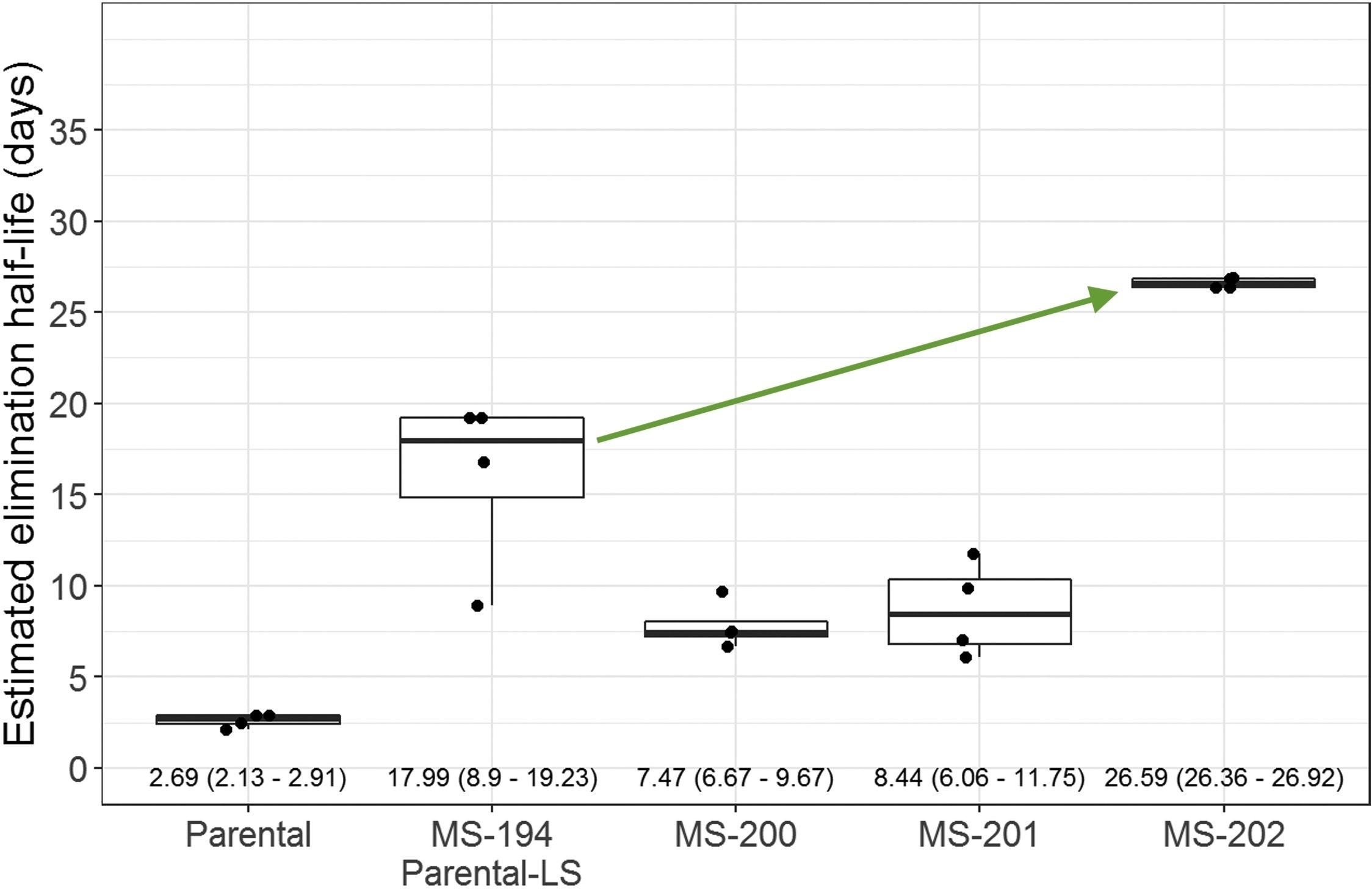
Serum Half Life

Developability optimization markedly improved serum half-life .

Empirical validation proves the case for early stage developability optimization.

Capabilities

Explore Detailed Platform Documentation & User Guide →
01

Rank Order Analysis & Lead Selection

Evaluate antibody sequences across a wide range of developability attributes and predictive machine learning models to rank order and select lead candidates.

  • KBC Score: Aggregate developability score weighted by severity allows for cross-trait rank ordering and targeted lead selection.
  • Lead Panel Selection: Rank order and select candidates based on customizable scoring weights, thresholds, and filtering criteria.
  • Predicted Biophysical Properties: Multi-modal machine learning forecasting 10 quantitative developability endpoints calibrated on clinical-stage therapeutics .
  • RPEMHC Immunogenicity: Deep learning 15-mer sliding window MHC Class II binding prediction across an expanded 20-allele global panel with population-weighted ADA risk scoring .
  • Covariance Analysis: Statistical OMES and Pairwise Conservation Score (PCS) analysis to detect and repair broken structural contacts and co-evolving residue constraints .
  • Automated Fv Profiling: Granular multi-attribute analysis including:
    • Germline Mapping: Closest V/J-Gene identity and origin mapping across chains.
    • Nearest Neighbor: Identification of nearest sequence neighbors within antibody sequence space.
    • CDR Lengths: Evaluate CDR loop lengths and total CDR sum.
    • Structural Stability: AbLang, AbLang2, and IgBert machine learning likelihood scores predicting conformational stability .
    • Salt Bridge Detection: Identification of disrupted HC-CDR3 salt bridges that impact CDR stability and efficacy .
    • Surface Properties: Surface Hydrophobicity (SPH), Positive/Negative Charge Patches (SPP/SPN), and Fv Charge Dipole (SPCD) calculation .
    • Cysteine Analysis: Detection of unpaired, missing, or non-canonical cysteines to ensure stable disulfide pairing.
    • Potential PTMs: Deamidation, isomerization, oxidation (Met/Trp), N-glycosylation, hydrolysis, and fragmentation scanning .
    • Humanness (OASign): Log-likelihood scoring against 130M+ human antibody sequences.
    • Isoelectric Point (pI): Theoretical (Bjellqvist) and empirical structure-based (PROPKA) pI evaluation to optimize formulation and avoid serum instability.
02

In-Silico Engineering & Optimization

Design, evaluate, and build optimization variants, combinatorial libraries, and humanized candidates directly within the workspace.

  • First Pass Optimize: Automated 1-click optimization engine scanning and repairing developability liabilities and language model penalties with structural solvent accessibility gating.
  • Humanization & Bulk Humanize: Germline template or Sapiens-based humanization with controlled site exclusions, plus automated high-throughput bulk humanization across lead panels.
  • Combinatorial Variant Generation: Multi-set design workspace with mutual exclusivity and linked pairing rules (`Pair Single` / `Pair Together`), Min/Max mutation filters, and Deep Mutational Scanning (DMS) permissibility integration.
  • Isoelectric Point Engineering: Shift candidate pI toward basic or acidic ranges with solvent-accessible charge redesign while monitoring humanness and stability.
  • Surface Properties & Mutagenesis: Visualize and redesign residues contributing to hydrophobic patches, charge clusters, pH switches, or binding interfaces.
  • Batch & Multispecific Assembler: Assemble full-length IgG, bispecifics, CrossMabs, scFvs, and complex heterodimeric formats with pre-configured linkers and Knobs-into-Holes domains.
  • Fv Pair Extraction & Junction Repair: Automatically dissect VH/VL variable domains from multispecifics and correct constant light chain V-J junction frame defects.
  • 3D Structural Modeling: Generate high-accuracy 3D structural Fv models directly in-browser using ABodyBuilder2 .
  • Observations Log: Record and search IMGT-positioned residue observations and experimental history across projects to guide engineering choices.
03

Visual Analysis, Discovery & Reporting

Interactive dashboards and discovery tools for multi-parameter exploration, phylogenetic diversity, structural mapping, and compliance.

  • Interactive Multi-Parameter Explorer (Plot Results): 2D Scatter Plots, Box Plots (with violin contours), Binned Histograms, and Bar Rankings with automated 1-vs-all Best Fits correlation discovery and multi-variable combinatorial regression.
  • Clading & Lineage Evolution: Phylogenetic clustering with Somatic Hypermutation (SHM) divergence from unmutated germline precursors (UCA), ancestral vs. private branch developability liability glyphs, and circular sector layouts.
  • Numbering Schemes & CDR Regions: Aho, IMGT, Martin, and Kabat numbering assignments with Aho, IMGT, Martin, Kabat, and North CDR region detection .
  • Sequence Alignments: Numbering system-based alignments with consensus calculation, germline cluster shading, and direct residue comparisons.
  • 3D Structure & Structural Liabilities: Interactive in-browser Molstar 3D structure viewer with per-residue liability mapping, solvent accessibility, and PyMOL/MOE SVL export capability.
  • Humanness & Residue Analytics: Multi-method evaluation against human germlines with per-residue OASign, Sapiens Diff, Positional Frequency Analysis (PFA), and 2D MHC-II peptide presentation matrix heatmaps.
  • Mutation Grid & Physical Properties: Side-by-side mutational difference matrices between parent and variant clones alongside panel-wide physical property dashboards.
  • Clinical Comparison: Benchmark candidate developability profiles against the Jain clinical-stage therapeutic antibody landscape .
  • PLAbDab Patent & Literature Search: Perform internal similarity searches against the PLAbDab patent and literature antibody database.
  • WIPO ST.26 Patent Sequence Listing: 1-click generation of patent-compliant WIPO ST.26 XML sequence listings for global patent filings (USPTO, EPO, WIPO).
  • Comprehensive Analysis Reports: Export structured Word (`.docx`) audit reports and formatted, color-coded multi-sheet Excel workbooks.
Platform Architecture & Technical Briefs

Platform Architecture & Tool Briefs

Review in-depth technical briefs detailing the algorithms, developability metrics, competitive advantages, and workflow architectures across each AbLead analytical module.

Complete Platform Suite

AbLead Platform Portfolio

Download the executive portfolio covering the AbLead antibody analysis and engineering pipeline in a single document.

15 Pages Complete Suite High-Resolution PDF

Library Evaluation & Ingestion

High-Throughput NGS Quality Control, Clonal Deduplication, and Kinetic Selection

Directly ingest FASTQ, FASTA, and multi-file ZIP archives. Automated Phred QC scoring, 7-region IMGT completeness checks, format auto-detection, and multi-round biopanning enrichment kinetics.

View Brief

Results Rank Order & Metadata Presets

Unified Lead Prioritization, Custom Scoring Presets, and Multi-Parameter Optimization

Multi-attribute discovery dashboard combining sequence, structure, humanness, and assay data. Customizable KBC scoring presets, live directional formatting, and formula-intact Excel exports.

View Brief

Sequence Alignment & Positional Analytics

Multi-Scheme Numbering, Dynamic Sequence Logos, and Integrated Liability Tracking

Structural precision numbering (IMGT, Kabat, Aho, Martin), stacked amino acid Sequence Logos, closest germline baseline tracking, and integrated developability liability overlays.

View Brief

Repertoire Clading & Lineage Distribution

Phylogenetic Clustering, Germline Rooting, and Parsimonious Liability Tracking

Hierarchical cladograms with unmutated common ancestor (UCA) germline rooting, real-time distance cutoffs, and parsimonious mapping of ancestral vs. private sequence liabilities.

View Brief

Developability Liabilities & 3D Structural Mapping

Comprehensive PTM Motif Detection, AI Stability Gating, and Real-Time 3D Visualization

Comprehensive chemical degradation and PTM motif detection (Satlawa et al. 2024), antibody language model stability penalties (AbLang, AbLang2, IgBert), and synchronized 3D structure mapping.

View Brief

Germline Analysis & Allotype Detection

Multi-Species Origin Mapping, Framework Homology, and Automated Constant Allotyping

Framework-first deterministic germline assignment across 10 species. Multi-domain dissection (Leader, V, J, Constant) and automated IgG subclass and human allotype calling.

View Brief

Humanness & Immunogenicity Assessment

Repertoire OASign Humanness and RPEMHC Class II MHC T-Cell Epitope Prediction

Mitigate Anti-Drug Antibody (ADA) risks by combining OASign repertoire humanness with RPEMHC DeepMHCII physical presentation across 11 core global Class II HLA-DRB1 alleles.

View Brief

Position Frequency Analysis (PFA)

Repertoire Statistical Likelihoods, Language Model Evaluations, and 3D Structural Gating

Statistical amino acid frequencies from >127 million human antibodies coupled with four antibody transformers (Sapiens, AbLang, AbLang2, IgBert) and synchronized Mol* 3D rendering.

View Brief

Surface Properties & Structural Developability

Hydrophobic Patches, Charge Densities, and Electrostatic Dipole Profiling

Predict formulation risks directly from 3D structures. Measures spatial surface hydrophobicity (SPH), positive (SPP) and negative (SPN) charge patches, and electrostatic dipoles.

View Brief

Clinical Benchmark Comparison

Benchmarking Discovery Leads Against 580+ Clinical-Stage Therapeutics

Contextualize candidate biophysical metrics against 584 clinical-stage antibodies from Thera-SAbDab and Jain et al., providing statistical percentile boundaries for drug-likeness.

View Brief

Institutional Observations Memory

Centralized Per-Residue Lab Knowledge Tracking and Cross-Project Experience Reuse

Capture and retain wet-lab assay learnings anchored to IMGT residue positions. Displays universal cross-tool warning pins to prevent re-testing failed experimental modifications.

View Brief

Antibody Assembler (Bulk & Multispecific)

Drag-and-Drop mAb Rebuilding, Bispecific Engineering, and Zero-Error Formatting

Zero-error construct building with batch constant domain stitching and multispecific drag-and-drop mode supporting Knobs-into-Holes, CrossMabs, linkers, and Fc silencing mutations.

View Brief

Antibody Humanization

Precision Germline Template Matching, BioPhi Sapiens AI, and Structural Exclusions

Deterministic germline template matching and BioPhi Sapiens AI humanization with structural exclusions protecting CDR loops, Vernier zones, and nanobody VHH interfaces.

View Brief

Lead Engineering & First Pass Optimize

Combinatorial Variant Generation, DMS Permissibility, and 1-Click Automated Optimization

Unified mutation tracking, deep mutational scanning (DMS) permissibility badges, combinatorial library generation, and 1-click First Pass Optimize automated liability remediation.

View Brief

Isoelectric Point (pI) Engineering

Structure-Based Charge Modification, Formulation Optimization, and Humanness Safeguards

Shift pI for formulation stability, serum particulation prevention, and bispecific purification using Bjellqvist titration, PROPKA 3 electrostatics, and real-time humanness gating.

View Brief
Transparent Enterprise Licensing

Simple, Predictable Concurrent Access

No per-seat penalties. Pay only for peak simultaneous capacity while granting your entire discovery team individual logins, personalized audit trails, and collaborative workspaces.

Concurrent Token

Annual Enterprise Token

Flexible floating capacity for biotherapeutic discovery teams

$14,000 USD
per Token / year (12-month term, invoiced in advance) * Plus applicable taxes. Price subject to change.
  • Minimum 1 Token to activate organizational subscription
  • Unlimited user accounts with individual credentials, Passkeys & 2FA
  • Floating seat pool dynamically reallocated as users log in and out
  • Automated inactivity timeouts release unused tokens automatically
  • Continuous auto-save preserves staged mutations, variants & state
  • Add tokens anytime with pro-rated billing for remaining months

The Token Advantage

Traditional named-user biotherapeutic software creates artificial barriers that lock out occasional users and cross-functional teammates. AbLead's floating Token model fixes this.

Unlimited User Accounts

Onboard your entire team—computational biologists, bench scientists, protein engineers, and leadership—with no per-seat surcharges.

Dynamic Floating Capacity

Each Token allows one actively logged-in user at any given moment. Tokens float dynamically across your organization in real time.

Active Teammate Visibility

If all tokens are in use, teammates see a real-time status card showing who is logged in and idle duration (e.g. "Active 3m ago") to coordinate handoffs.

Individual Security & Audit Trails

Eliminate risky shared credentials. Every scientist maintains their own password, WebAuthn Passkeys, 2FA, and granular project audit log.

Need guidance sizing your team's token pool? Contact Us →

Token Model vs. Named-User Licensing

How AbLead removes organizational friction compared to traditional biotherapeutic software
Feature AbLead Token Model Traditional Per-Seat Licensing
User Account Creation Unlimited authorized accounts Strictly limited to paid seats
Occasional & Part-Time Users Included at no extra cost Must purchase dedicated licenses
Billing Basis Peak concurrent active users Total registered individual users
Team Collaboration Frictionless cross-functional sharing Siloed access due to seat limits
Credential Sharing Eliminated (individual accounts) Frequent (security risk to avoid fees)
Seat Reallocation Dynamic and automatic in real time Requires manual admin reassignments
Questions about enterprise onboarding or subscription terms? Contact us at ablead@ketchemconsulting.com or review our SaaS License Agreement & Disclosure.

Get a Demo

Discover how AbLead accelerates biotherapeutic lead optimization, developability assessment, and antibody engineering. Fill out the form below to schedule a personalized walkthrough.

Prefer direct contact? Email us at ablead@ketchemconsulting.com or connect on LinkedIn.

References